 Kistarium
Coming soon
Kistarium
Coming soon
Kistarium
Coming soon
Kistarium
Coming soon
Photograph what you own. A small team of AI agents reads, files, values and watches the market for you.
Kistarium is a web platform where collectors catalog, value, share and trade their collections. Books, stamps, coins, cards, art, records and wine live in one product. A collector photographs an item, and AI agents turn the photo into a catalog entry with a current market value. On top of the catalog sit a portfolio, a community and a marketplace between private collectors.
Cataloging takes minutes per item: condition, edition, provenance, value. Across thousands of items that is weeks of work, so most collections are never documented, and an undocumented collection cannot be valued, insured or sold properly.
Nobody knows what a piece is worth without hours of research across marketplaces. Insurance and estate planning need that number and rarely get it.
Trading happens in forums, on eBay and in chat groups, and an item's history does not pass to the next owner. Showing what you own usually means showing everything.
Private collectors with hundreds or thousands of items. Small museums, libraries, societies, foundations and dealers who need a collection register and an inventory list without buying a collection management system.
Existing collector tools each cover a slice: cataloging apps built for typed entry, price trackers for a single category, and general marketplaces. Kistarium combines AI entry across categories, private and public visibility per collection, a provenance record per item and trading between collectors.
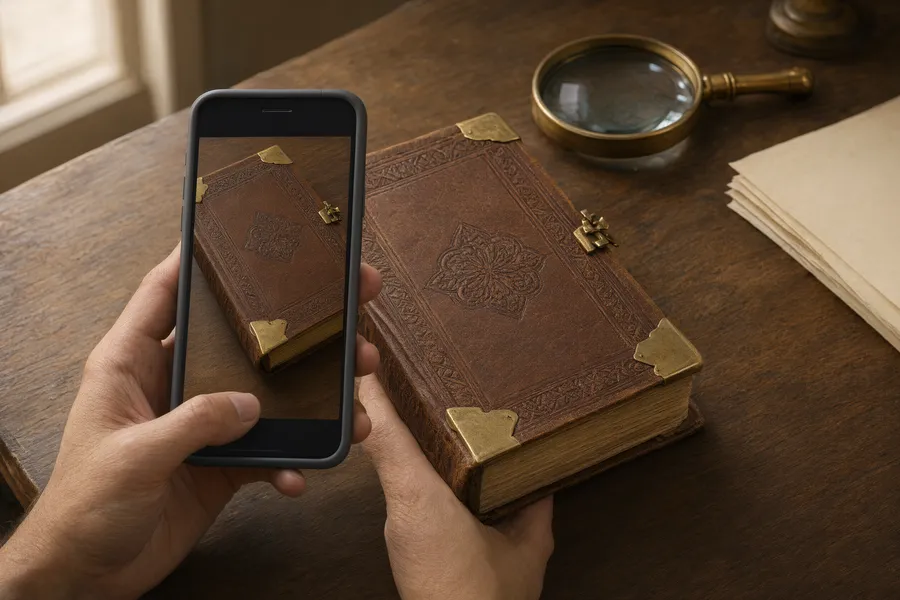
Take a picture of an item, scan its barcode or paste a list of what you own.
AI agents identify the item and draft a complete entry. You review it and keep what is right.
Agents look up what comparable pieces sell for and track the value of your collection over time.
Keep a collection private or show it, follow other collectors, and trade items with their history attached.

First editions, antiquarian volumes, signed copies.
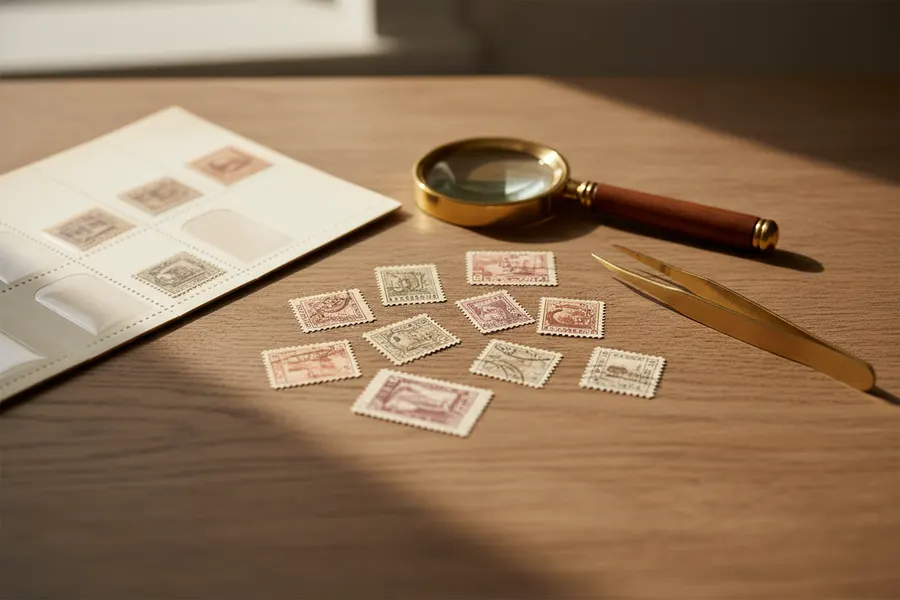
Philatelic rarities, postcards, posters, programmes.
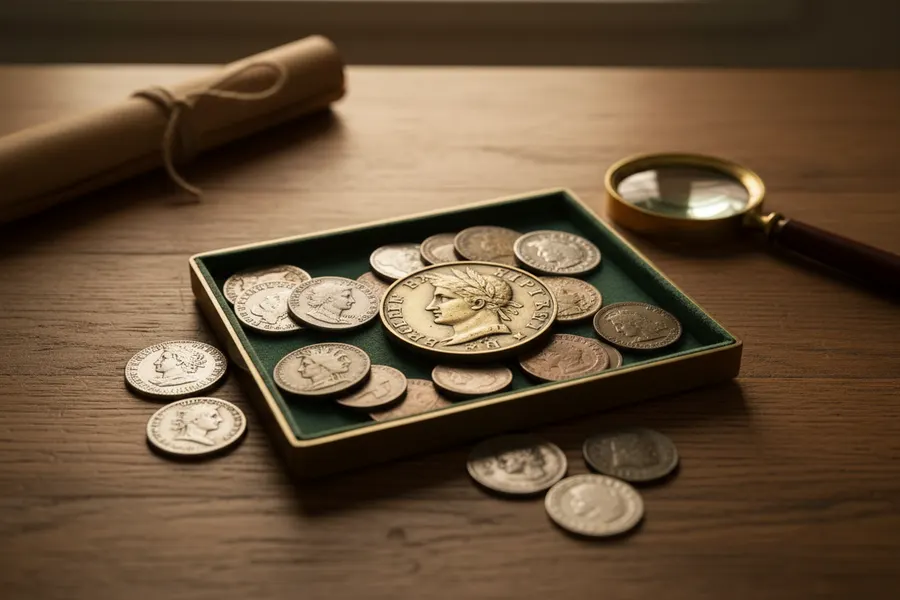
Silver, bronze, commemoratives.

Cellared vintages, single malts, aged spirits.
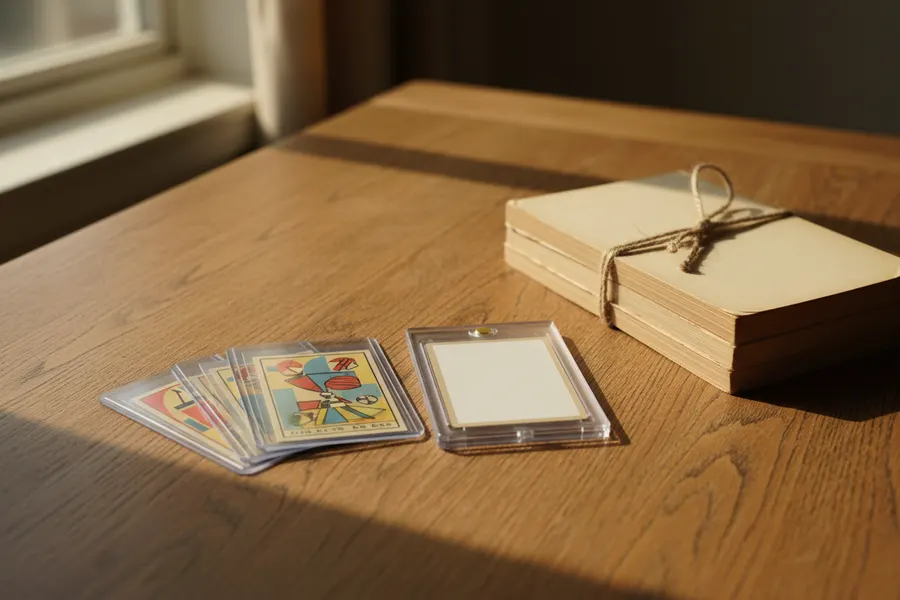
Trading cards, golden-age comics, graded copies.
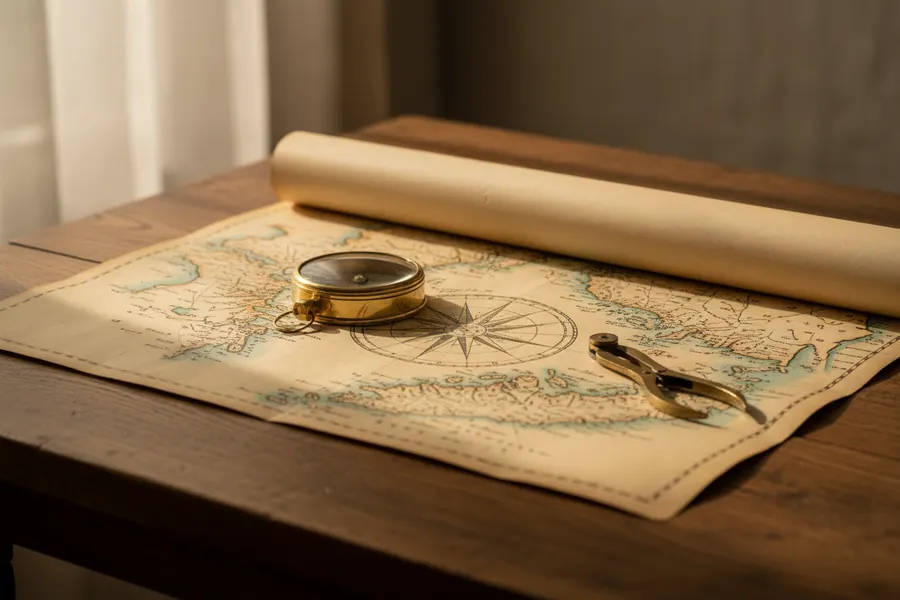
Antique cartography, sea charts, celestial maps.
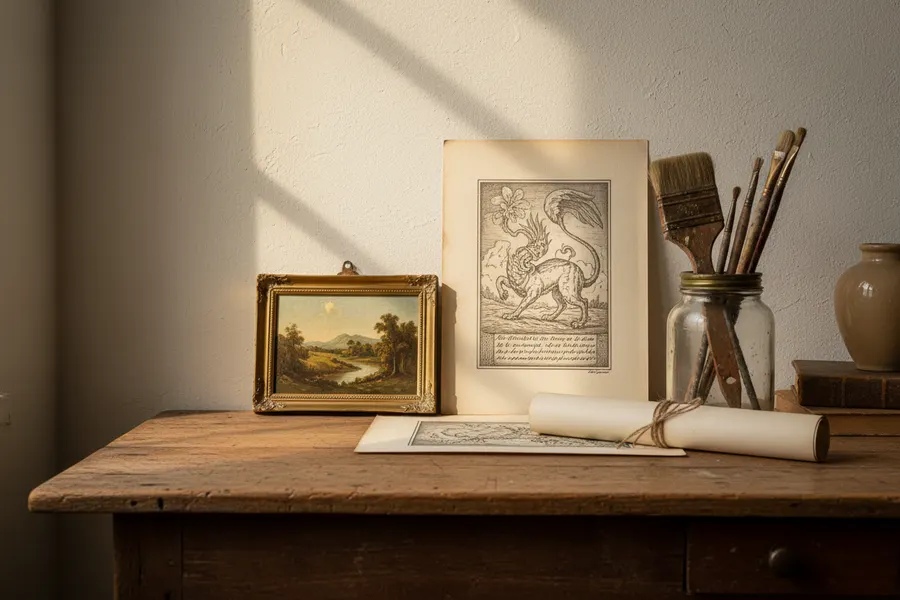
Paintings, etchings, lithographs, drawings.
Records on LP, EP, single, CD, cassette, shellac and cylinder. Periodicals, letters, photographs, posters and postcards. Beer alongside wine and whiskey.
Screenshots from the current build of Kistarium, taken with test accounts.
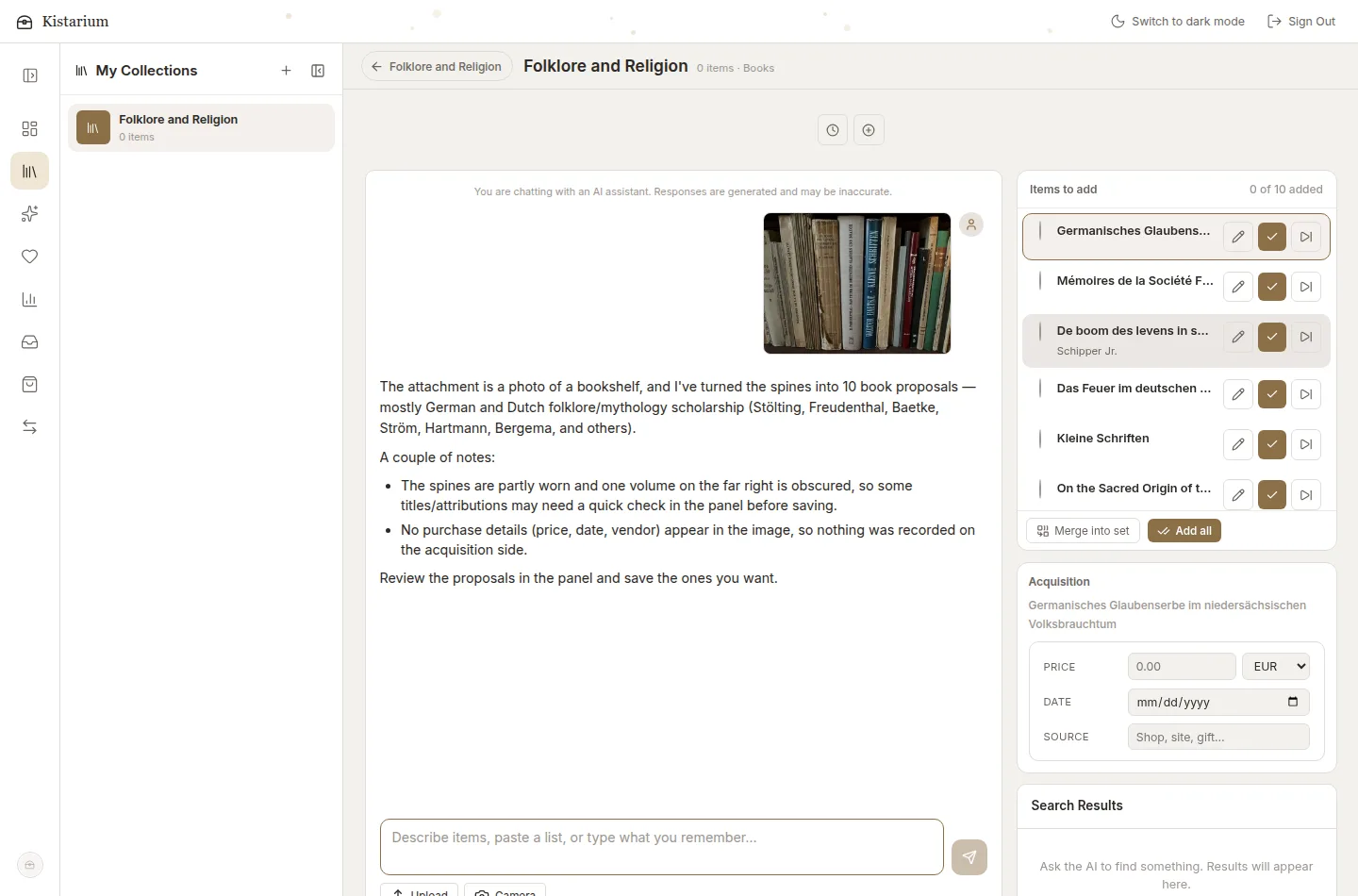
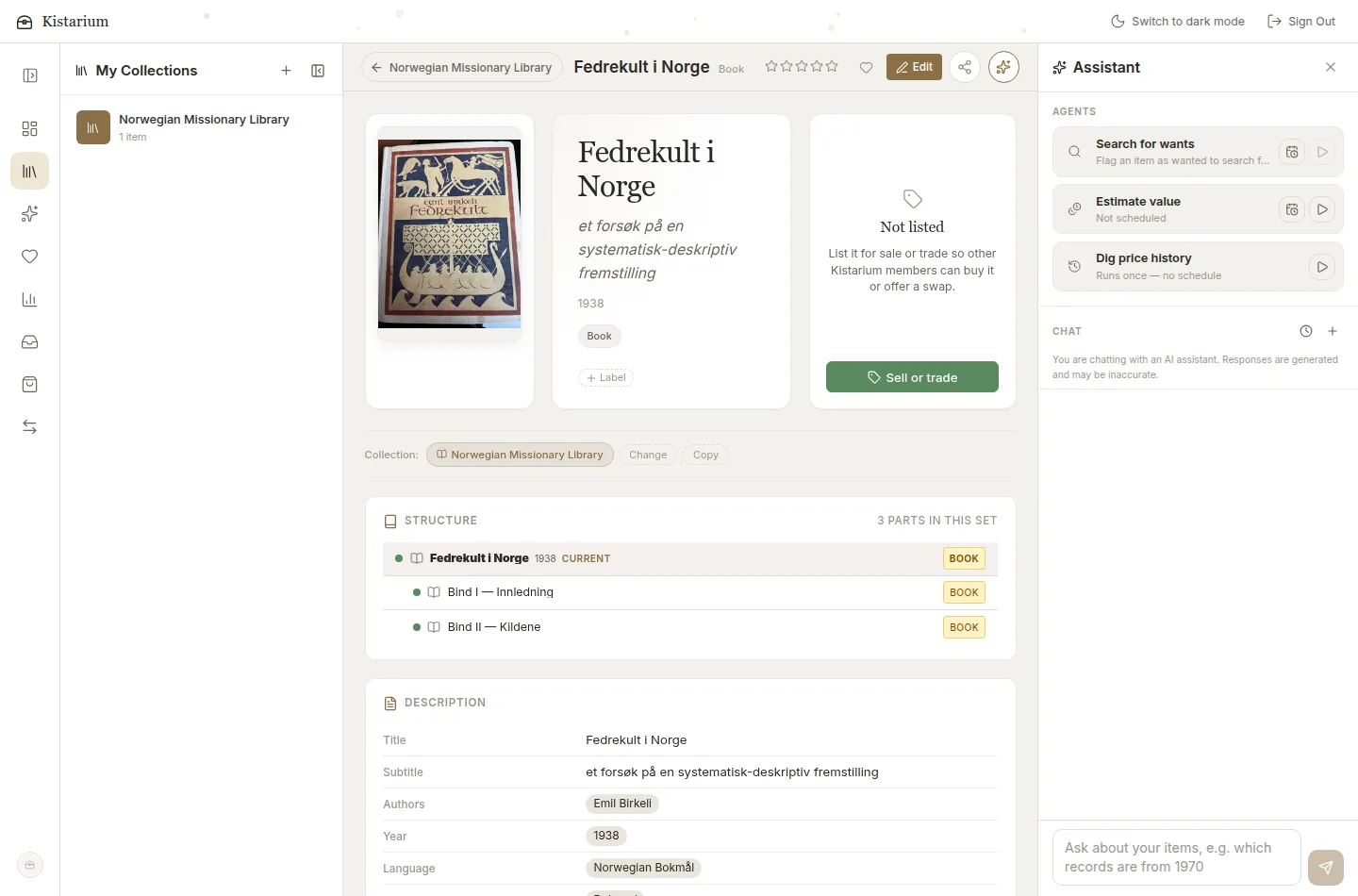
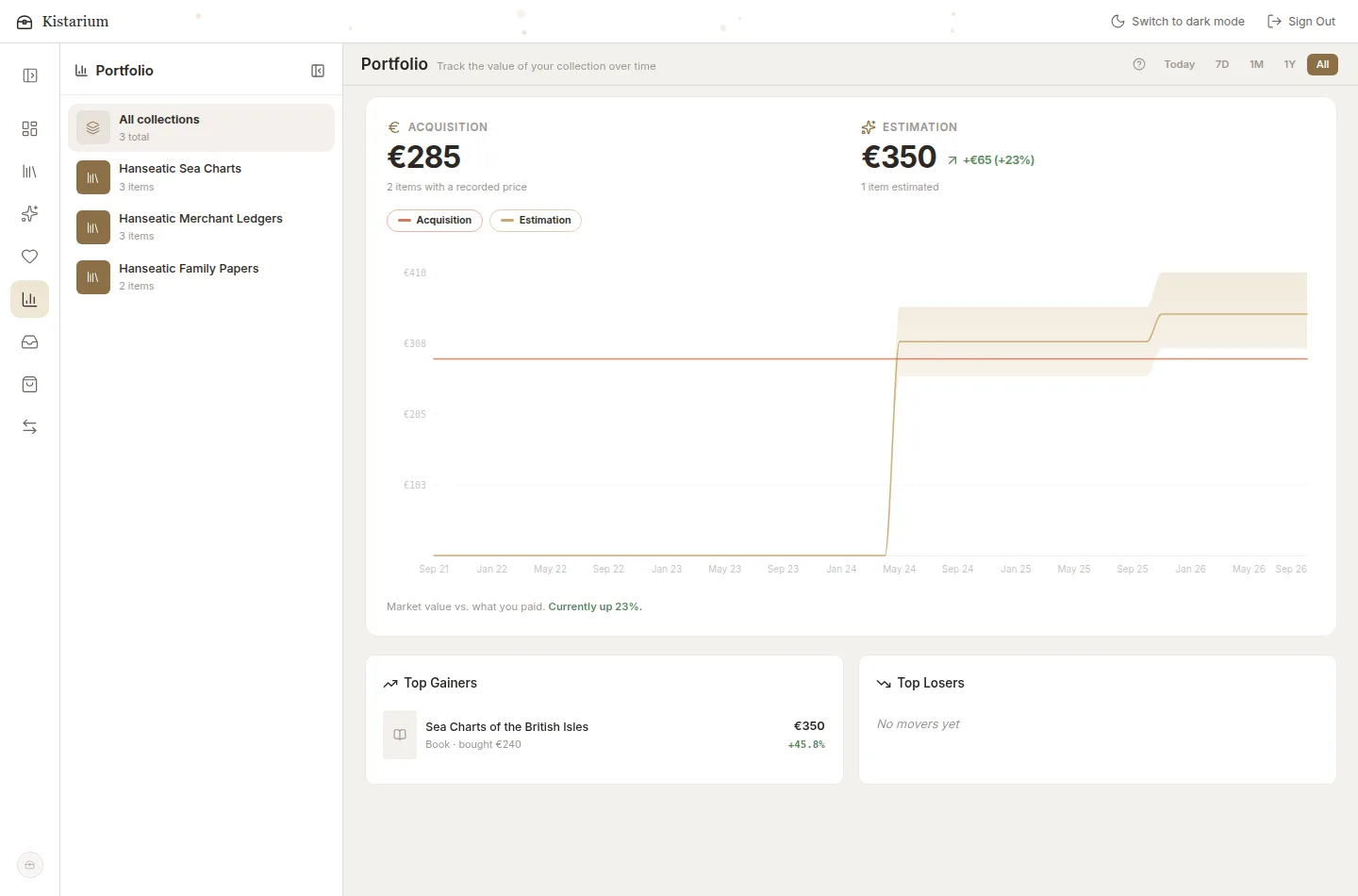
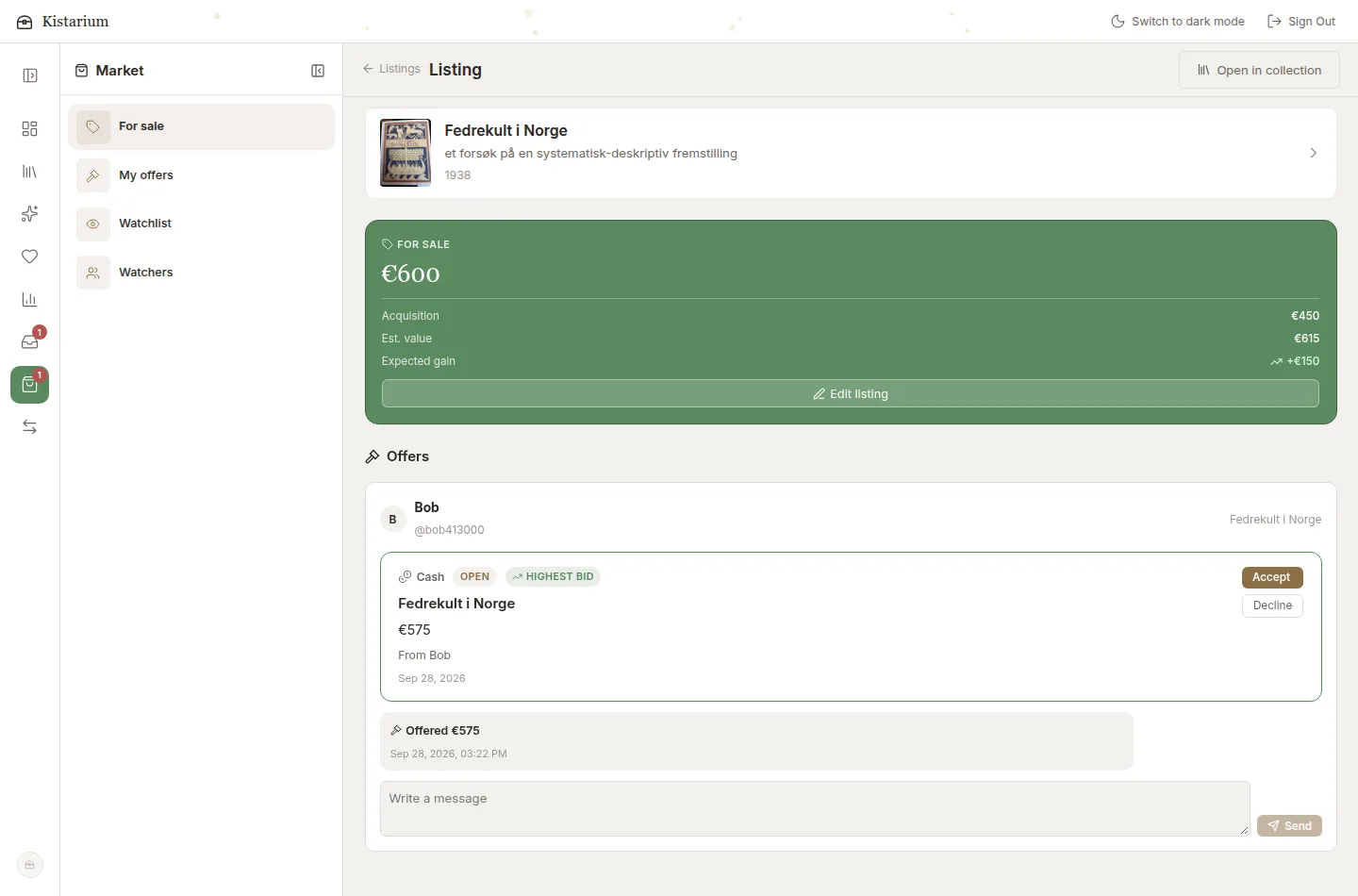
Kistarium has not launched yet. We will soon start a closed beta with a group of invited collectors.
Has built backend systems for more than 25 years, in Java and Go, from continuous-delivery tooling (an open-source Docker plugin for GoCD) to AI document processing at adacta.ai and warehouse software at pyck.ai. Designed and built Kistarium. Collects books and writes on medieval history. Ghent University. Based in Berlin.
A collector with a network of auction houses, booksellers, book dealers and librarians. Runs sales and customer management. Studied cultural history. Based in Norway.
Kistarium is built and operated by Pergament AS, a Norwegian technology company.
Pergament AS
Org.nr. 938 218 188 (Foretaksregisteret)
Austrepollen 226, 5476 Mauranger, Norway
hello@kistarium.com | pergamentas.com